Bad Teinach 2026 — Fine Art Photography Black Forest, Germany
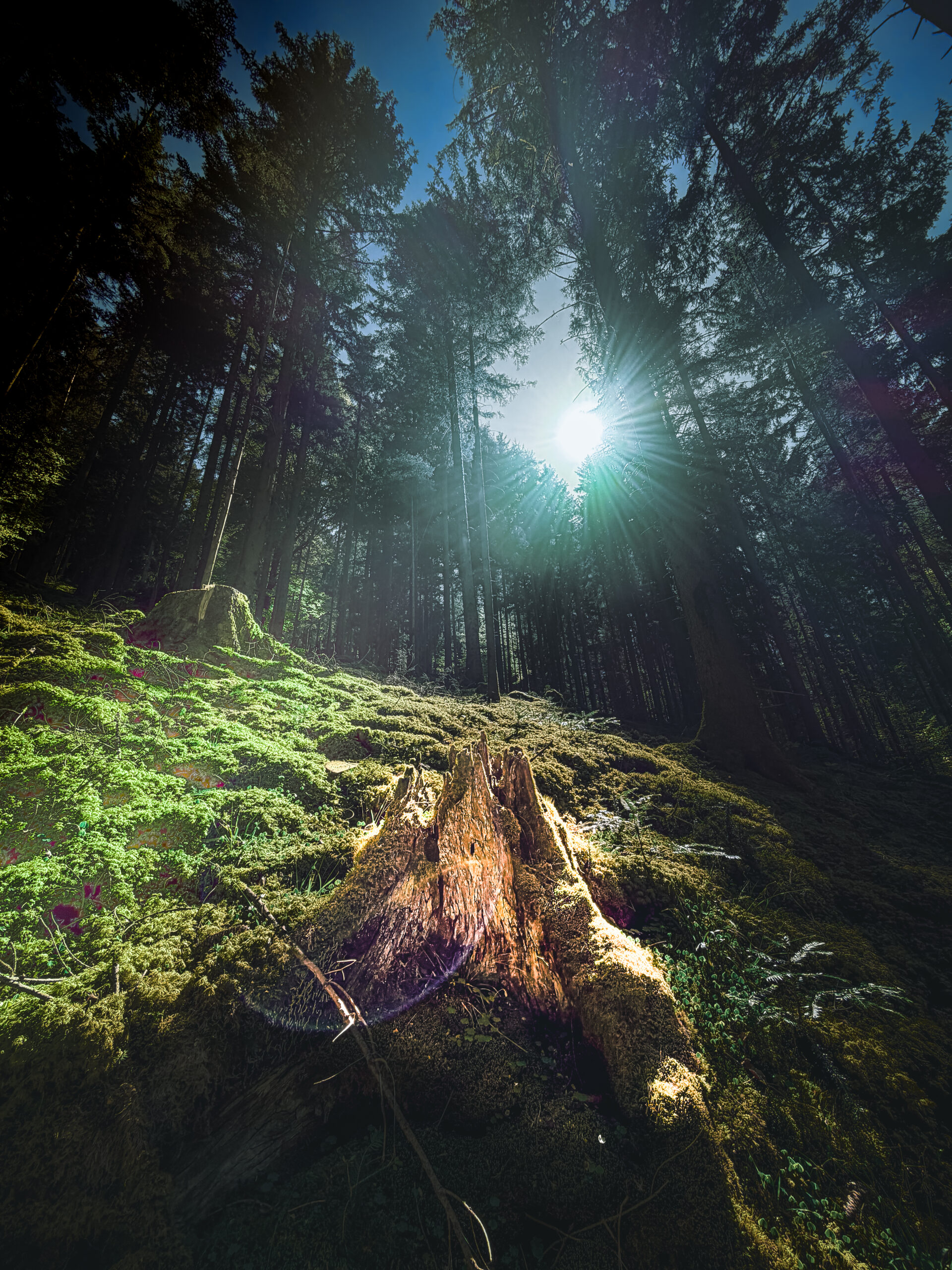
Some places do not reveal themselves immediately.
Bad Teinach, hidden deep within the northern Black Forest, felt like one of those places.
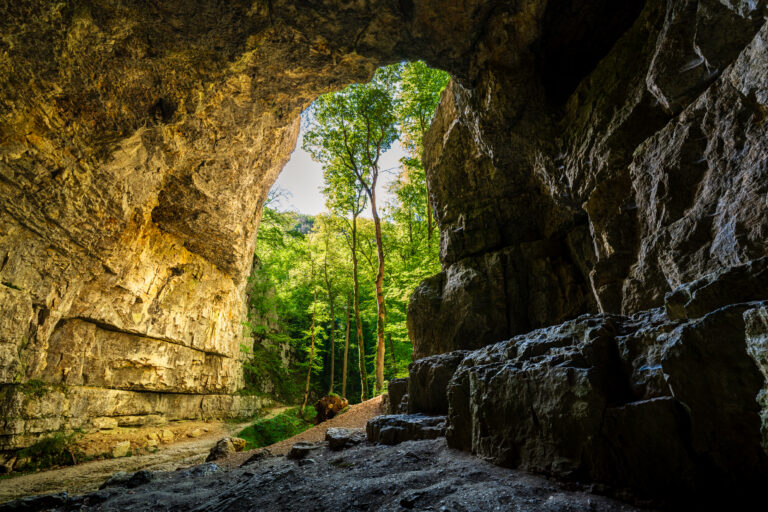
During a short trip through the region with my wife, I spent several days exploring forests, streams and quiet paths shaped by light, moss and silence. Rather than searching for postcard locations, I was drawn to smaller moments — the atmosphere between the trees, the texture of old wood, the stillness of water and the way sunlight slowly moved through the forest during the day.
What fascinated me most was the feeling of presence these places created. The Black Forest has a unique visual density. Light rarely appears all at once. It breaks through branches, reflects on wet stone and creates short-lived scenes that disappear only moments later.
Many of the photographs in this series were created while simply walking without a fixed destination. Some moments lasted only seconds before the atmosphere changed again. That transience is an important part of my work. I am less interested in technical perfection than in capturing the emotional character of a place as honestly as possible.
Alongside the landscapes themselves, I also documented architectural details, historic surroundings and the relationship between nature and human-made spaces within the region. For me, these elements belong together and shape the identity of a place.
This journal entry is the beginning of a larger visual series from Bad Teinach and the Black Forest — a personal collection of impressions, light and quiet observations gathered along the way.
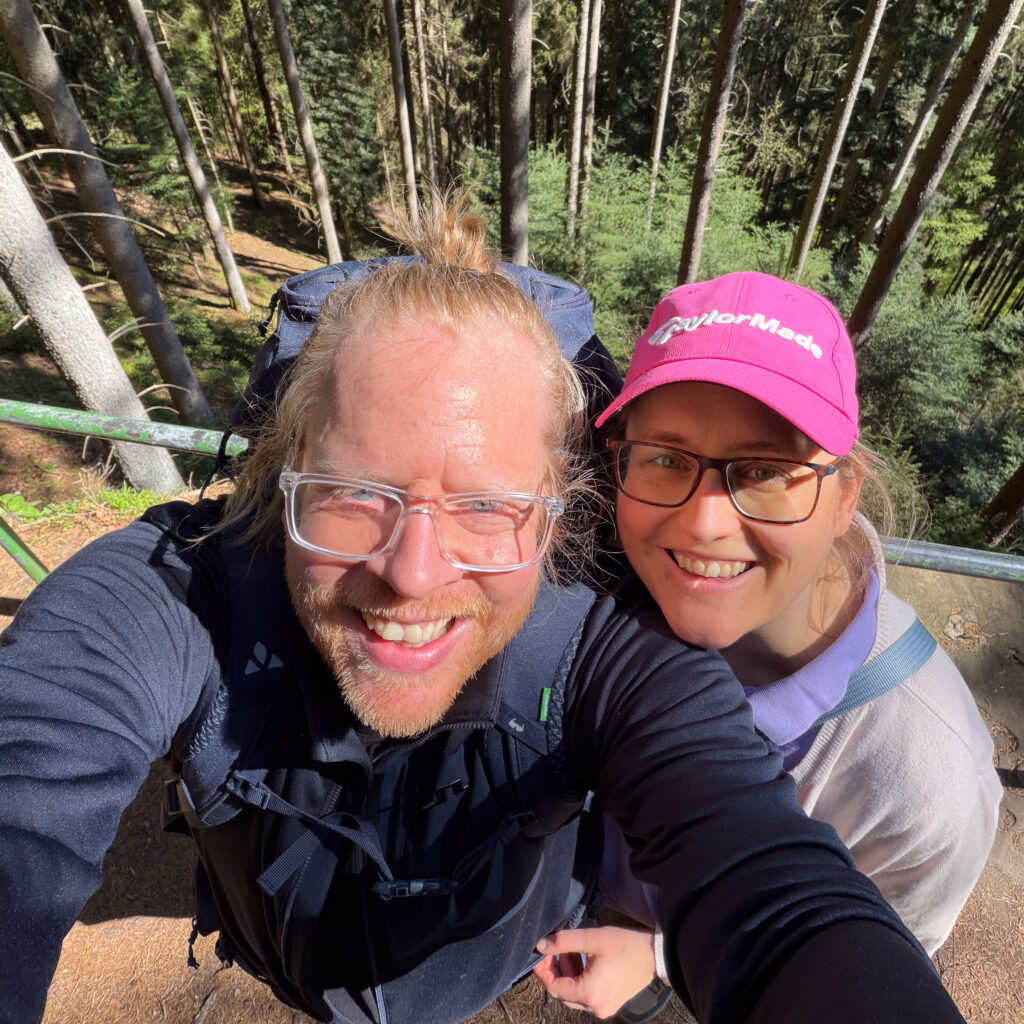
Exploring the Black Forest together is more than just hiking — it is a way of slowing down and reconnecting with nature. Around Bad Teinach, almost every path reveals something unexpected: quiet forest trails, hidden streams, dramatic rock formations and constantly changing light between the trees.
What makes this region so special is the atmosphere. Even short walks can turn into hours of discovery because there is beauty almost everywhere you look. Bad Teinach is one of those rare places that combines deep forest landscapes, peaceful surroundings and authentic Black Forest character, making it a perfect destination for nature lovers, photographers and quiet escapes.
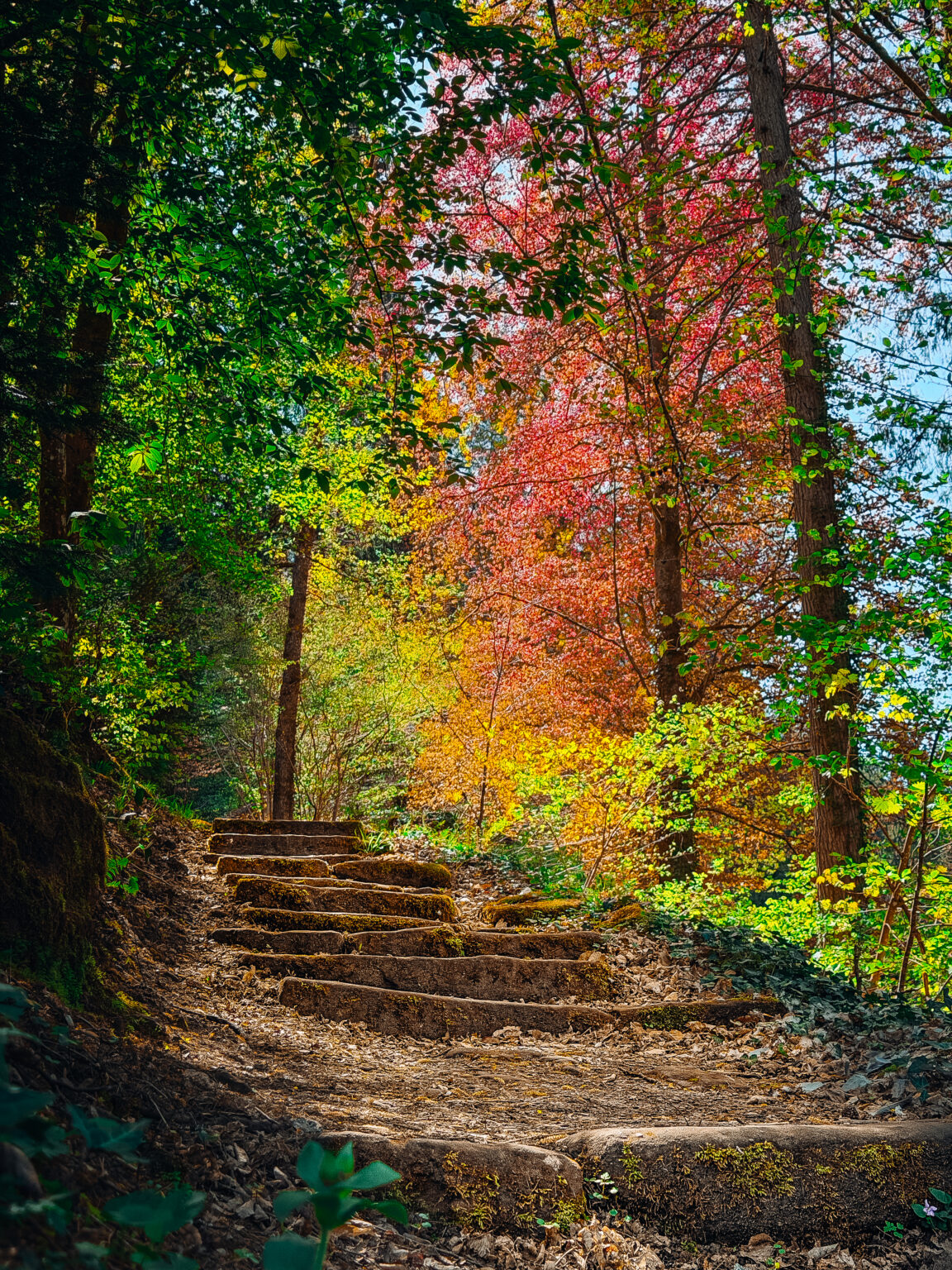
One of the most beautiful moments during our hike happened along this quiet forest path near Bad Teinach. Surrounded by deep greens and soft shadows, a single tree glowing in vivid red and orange suddenly created an incredible contrast within the landscape.
The weather that day was perfect for photography. Soft sunlight filtered through the forest canopy and illuminated the colors in a way that felt almost unreal, yet completely natural at the same time. Scenes like this only exist for brief moments before the light changes again.
What makes the Black Forest so special for me as a photographer is exactly this unpredictability. Around almost every corner, there is another composition waiting to be discovered — textures, colors, light and atmosphere constantly shifting throughout the day.
Bad Teinach truly feels like a paradise for landscape and fine art photography. The combination of dense forests, hidden trails, dramatic light and peaceful silence creates an environment where simply walking through nature becomes a visual experience in itself.
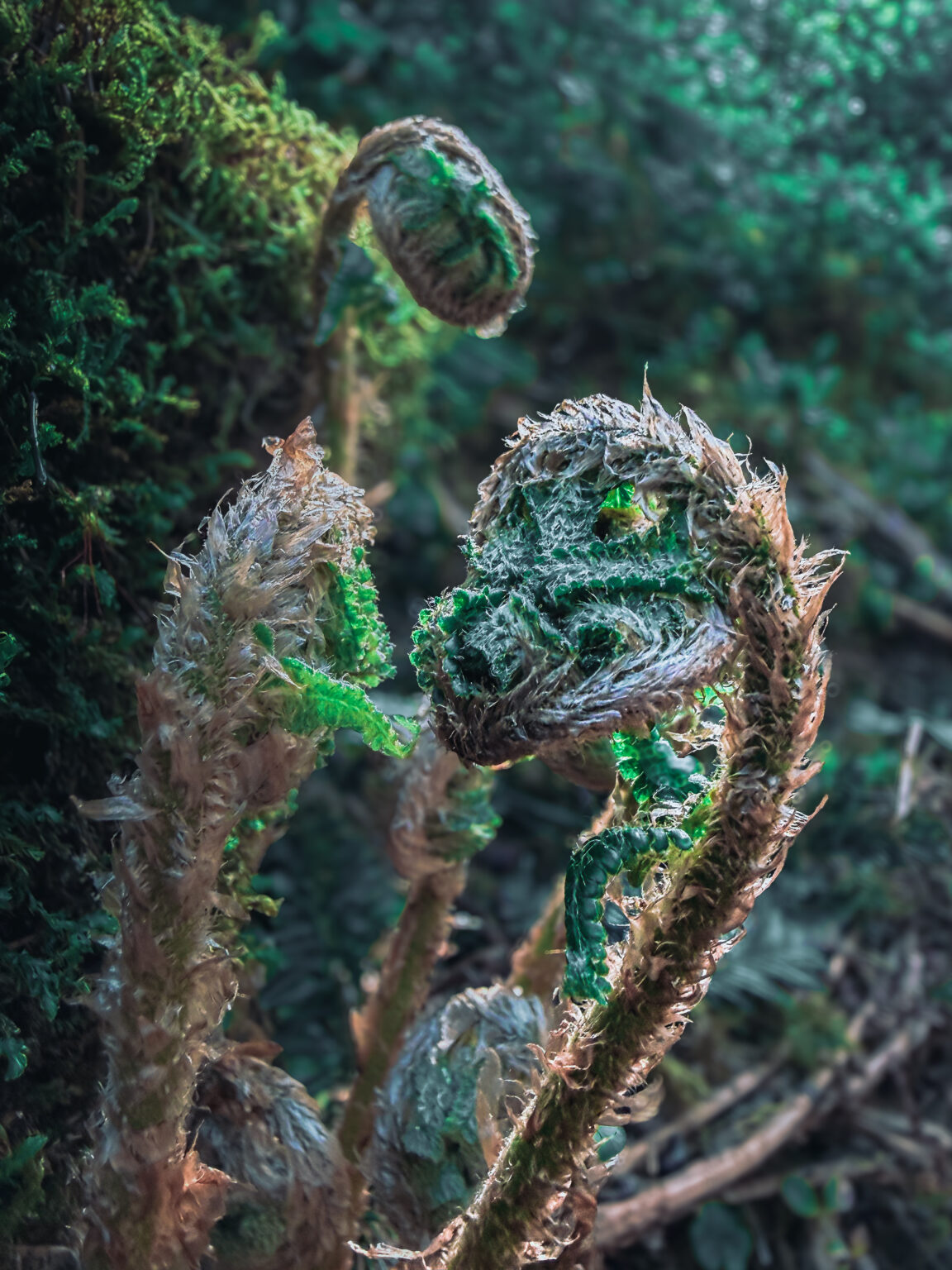
One of the things that makes the Black Forest feel almost unreal is the way nature constantly creates shapes and textures that resemble something from another world.
These unfolding ferns, discovered along a shaded forest path near Bad Teinach, immediately reminded me of tiny dragon creatures emerging from the moss-covered ground. Their curled forms, delicate textures and glowing green details looked less like plants and more like something from a fantasy landscape.
Moments like this are part of what makes the Schwarzwald so fascinating to explore as a photographer. The forest is not only beautiful on a grand scale through towering trees and dramatic light, but also within the smallest details hidden along the trails. If you slow down and observe carefully, the Black Forest begins to reveal an entirely different world filled with atmosphere, imagination and quiet wonder.
There is something timeless about these scenes — almost as if nature itself is telling ancient stories through texture, light and form.
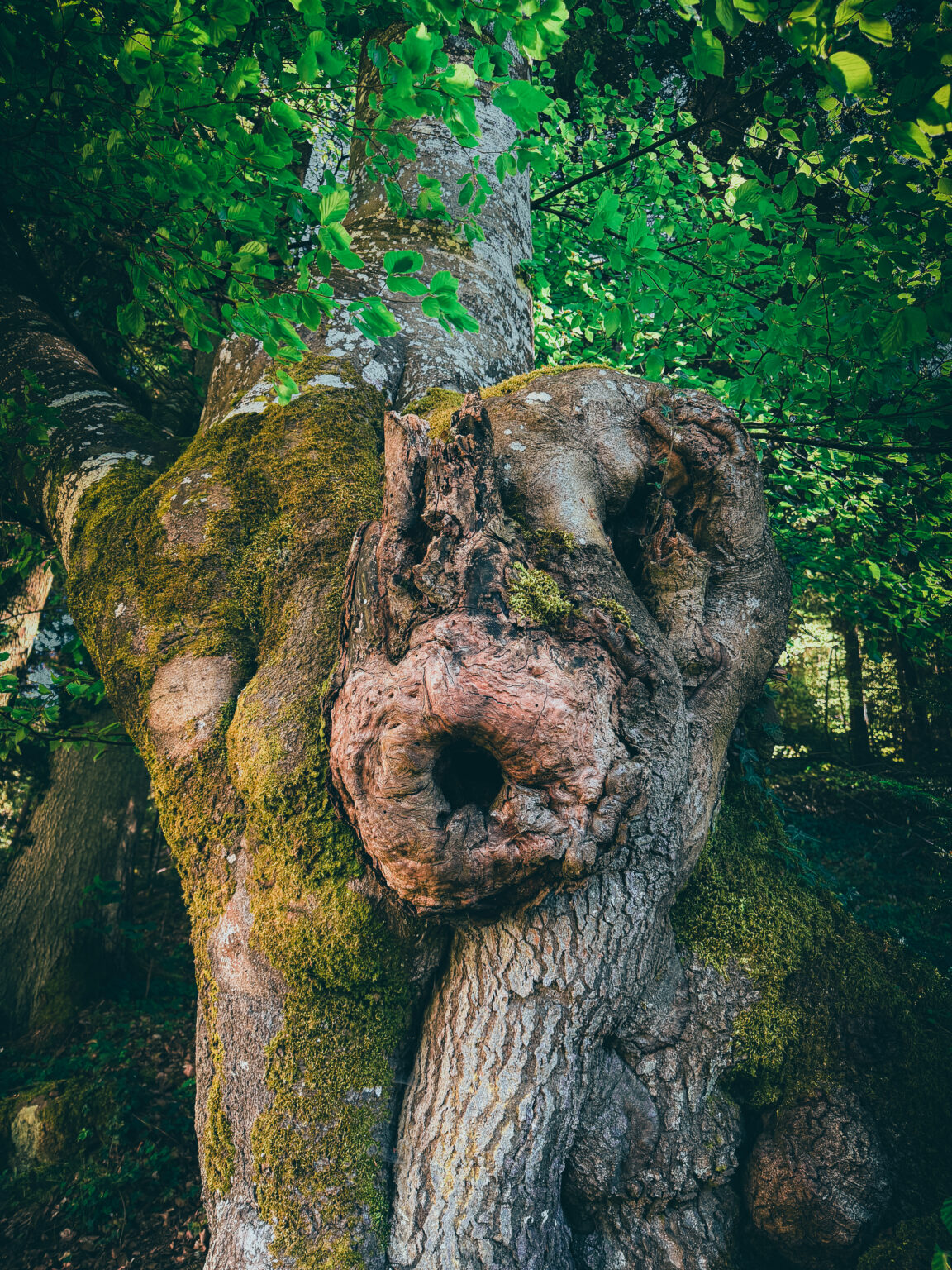
Some trees in the Black Forest feel less like part of a landscape and more like ancient characters from another world.
This remarkable tree, discovered during our hike near Bad Teinach, immediately reminded me of something out of The Lord of the Rings. Its twisted trunk, deep textures and moss-covered surface looked almost alive — as if it had been standing there for centuries, silently watching the forest around it change over time.
The Schwarzwald has this rare ability to blur the line between reality and imagination. In certain places, especially deep within the quieter parts of the forest, the atmosphere begins to feel almost mythical. Massive roots, unusual shapes and filtered green light create scenes that resemble something closer to Middle-earth than modern Germany.
What fascinates me most about these places is their character. Trees like this are not simply objects within the landscape. They carry presence, history and emotion. Photographing them feels less like documenting nature and more like discovering visual stories hidden within the forest itself.
Moments like this are one of the reasons why the Black Forest continues to inspire me as a fine art photographer. Around almost every corner, there is something unexpected waiting to be found.
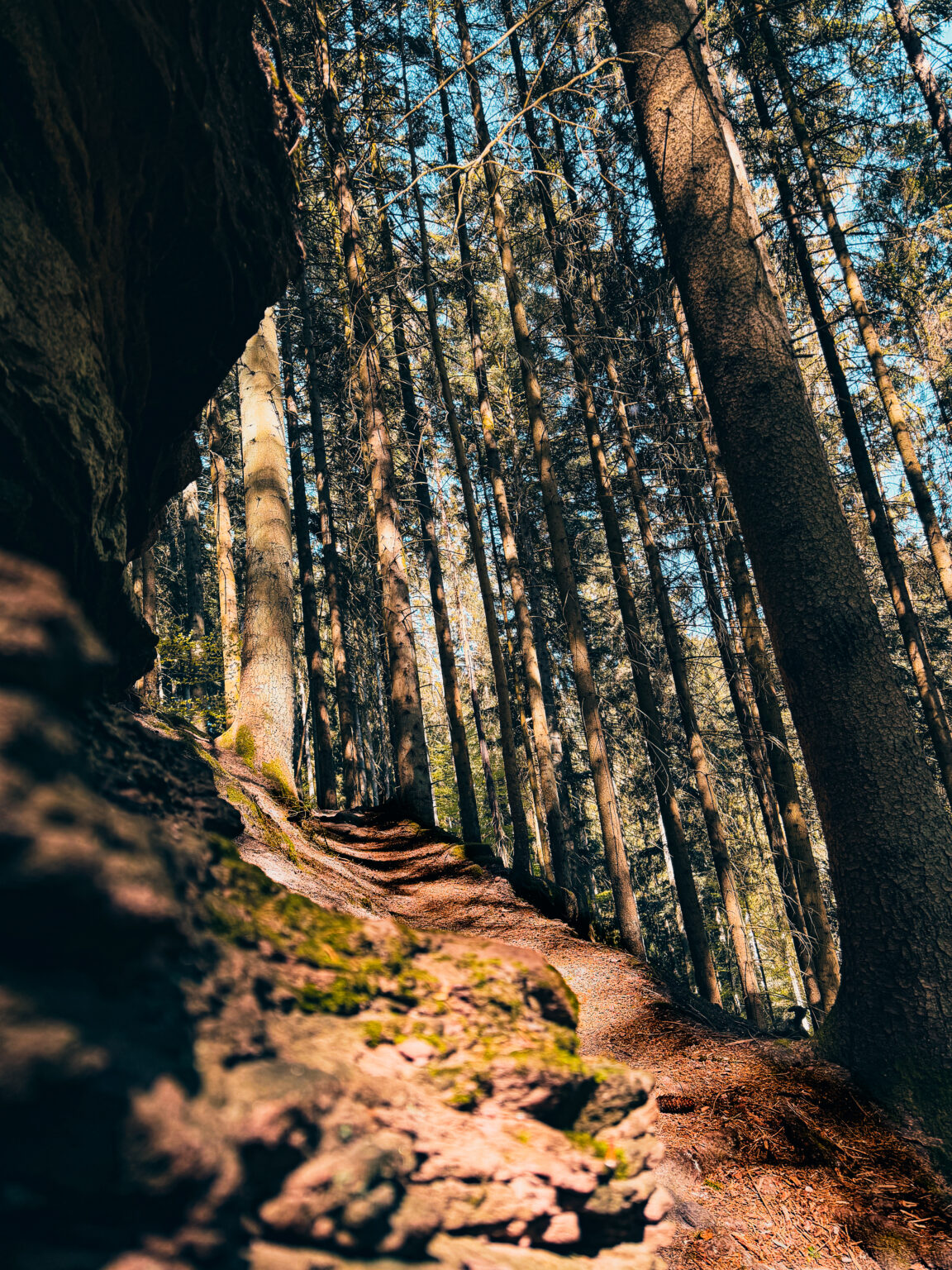
The hike toward the Stubenfelsen is one of those trails that slowly pulls you deeper into the atmosphere of the Black Forest with every step.
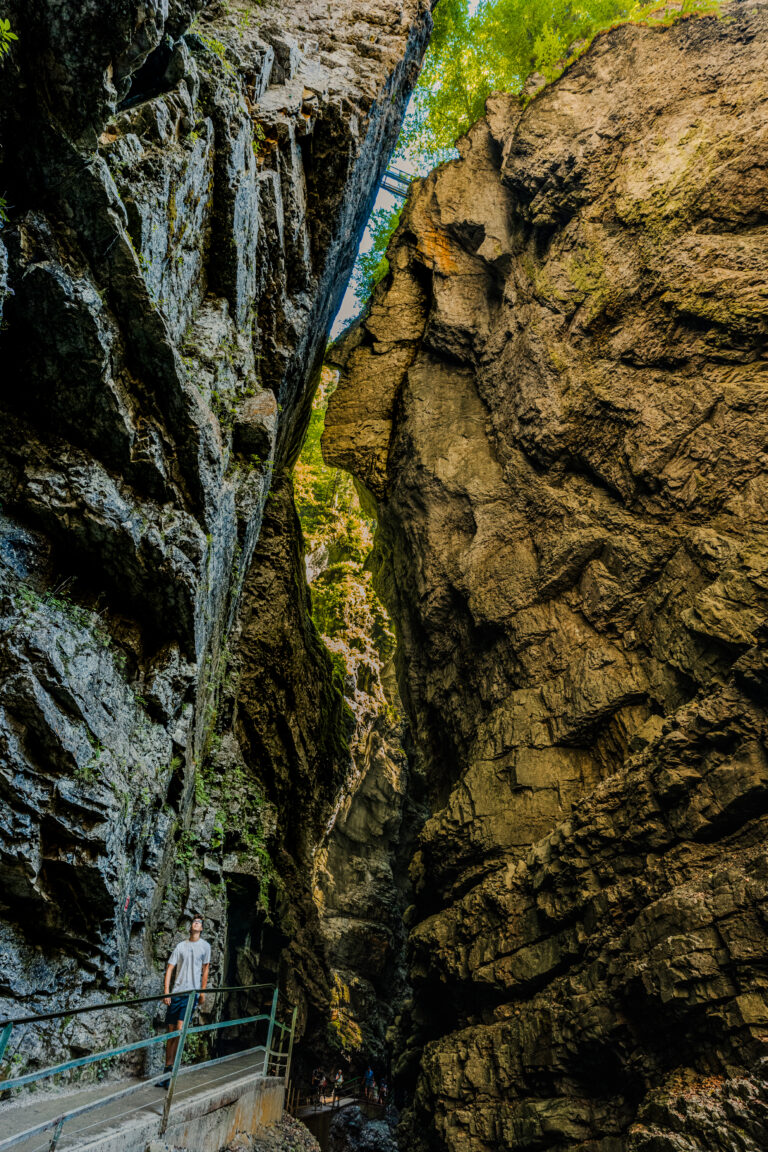
The narrow path winds steadily uphill between steep rock formations and towering trees, surrounded by the quiet sounds of the forest. Sunlight breaks through the dense canopy only in fragments, creating shifting patterns of light and shadow along the trail. Walking here feels less like following a hiking route and more like entering another world hidden within the Schwarzwald.
What makes this place so unique is the combination of scale and intimacy. The tall trees create an almost cathedral-like feeling, while the rugged rocks and winding path constantly reveal new textures, perspectives and moods. The further you climb toward the Stubenfelsen, the more immersive the atmosphere becomes.
For me as a photographer, trails like this represent the essence of the Black Forest. They are not only destinations, but experiences themselves. Every bend in the path offers another scene shaped by light, depth and silence — moments that invite you to slow down and truly observe the landscape around you.
The Stubenfelsen trail near Bad Teinach is one of those rare places where hiking, atmosphere and photography merge into a single experience.

The Stubenfelsen near Bad Teinach carries a presence that feels almost timeless. Standing in front of these layered rock formations, it becomes easy to imagine the immense geological timescales that shaped the Black Forest long before human history began.
In this black and white photograph, the focus shifts away from color and toward texture, structure and age. The visible layers within the sandstone reveal traces of an ancient landscape formed over millions of years through sedimentation, pressure and erosion. Every fracture and surface tells part of a story written far beyond human timescales.
The Stubenfelsen itself is one of the characteristic rock formations found within this region of the northern Black Forest. These rugged sandstone cliffs were shaped through natural weathering processes and became deeply integrated into the identity of the surrounding forest landscape. Walking along these formations feels almost like stepping into a forgotten world suspended between geology, myth and silence.
Photographing the rock in black and white emphasizes this sense of history and permanence. Without the distraction of color, the layered textures begin to resemble an old geological archive — a quiet reminder that landscapes are constantly evolving, even if those changes remain invisible within a single lifetime.
For me, images like this are not only about documenting nature, but about capturing the feeling of standing before something far older and larger than ourselves.
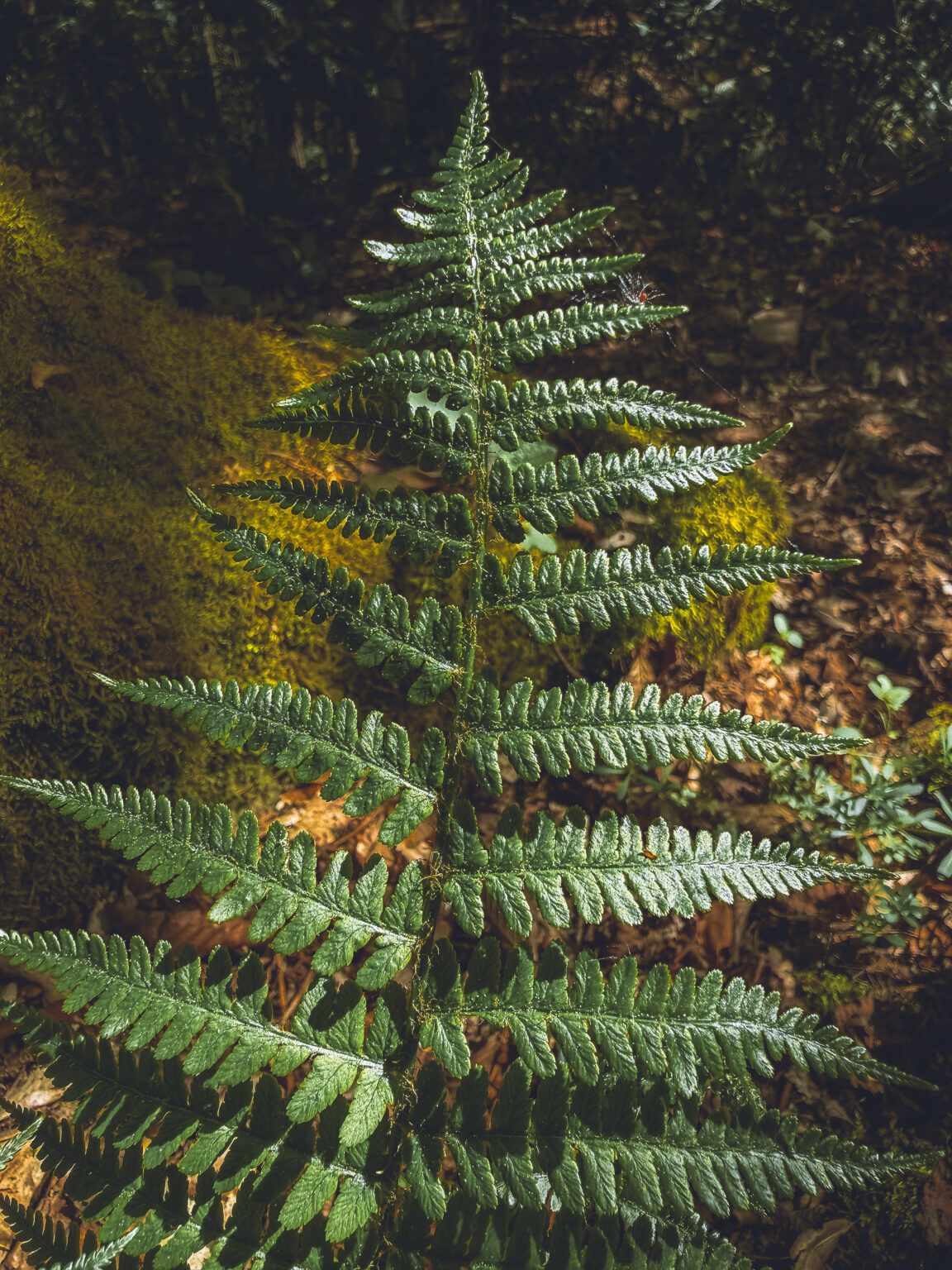
Hidden high above the forest floor, this fern revealed itself only after climbing onto the moss-covered rocks surrounding the Stubenfelsen trail.
From below, it would have been almost invisible among the shadows and dense vegetation of the Black Forest. But standing higher on the rocks, the sunlight suddenly reached the leaves and transformed the scene completely. The fern seemed to glow against the darker forest behind it, quietly revealing a beauty that only becomes visible when slowing down and exploring more carefully.
Moments like this are what make hiking through the Schwarzwald so rewarding. The forest constantly hides smaller details beyond the main trails — textures, plants and light that often remain unnoticed unless you take the time to look closer. Many of the most atmospheric scenes are not the obvious panoramic views, but the quiet discoveries hidden between stones, moss and filtered light.
What fascinated me about this fern was its almost perfect structure. Surrounded by rugged rock and deep forest shadows, it appeared delicate yet resilient at the same time, growing directly from the ancient landscape around it.
The Black Forest has a remarkable ability to transform even the smallest natural details into something cinematic and timeless.
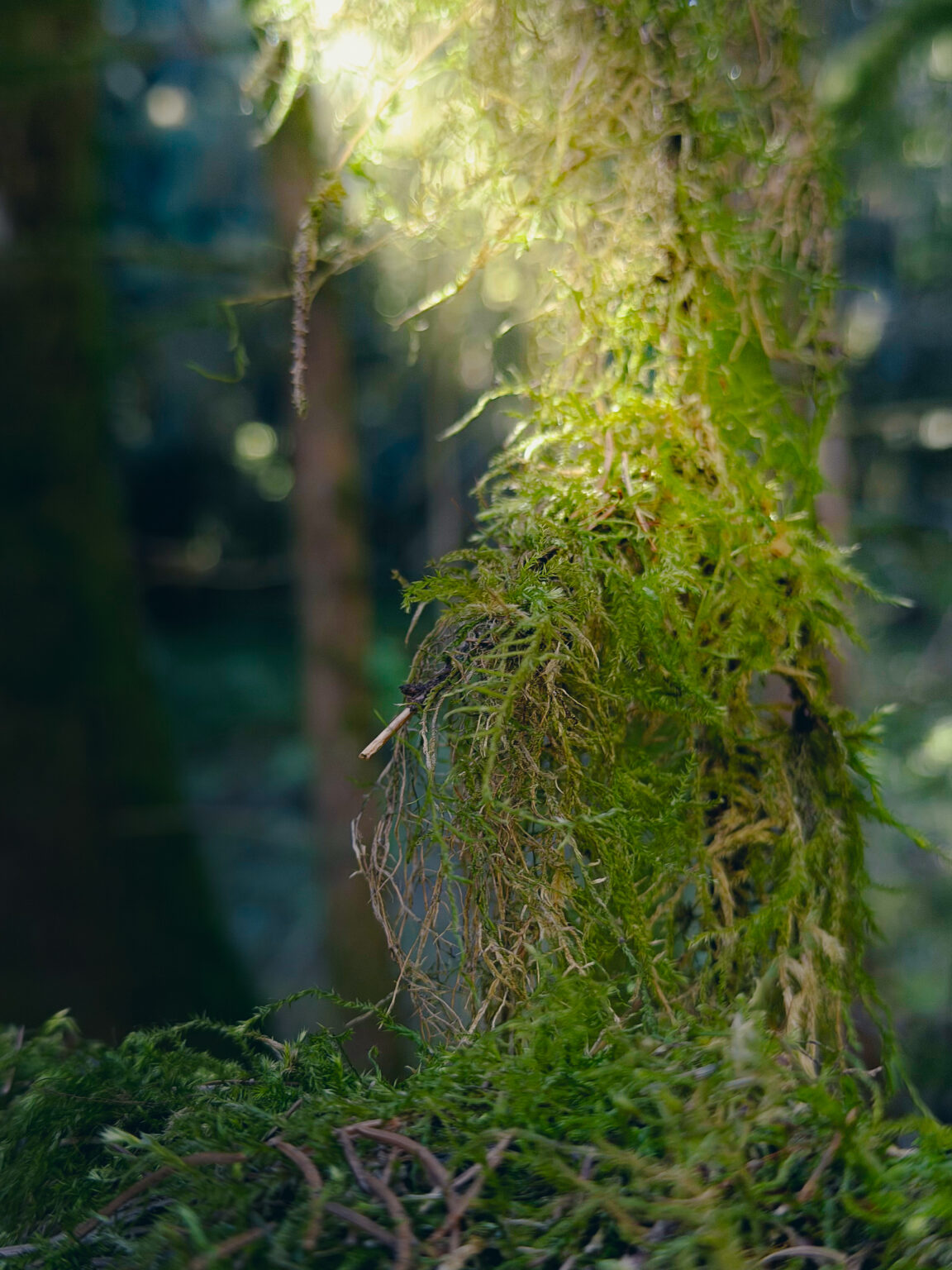
One of the most fascinating things about the Black Forest is how quickly light can transform an ordinary scene into something almost magical.
This moment lasted only for a few seconds. While walking through the dense forest near Bad Teinach, a narrow beam of sunlight suddenly broke through the trees and illuminated the moss growing along the trunk. Against the darker surroundings, the moss seemed to glow from within, revealing textures and delicate details that would have remained invisible only moments before.
Scenes like this are easy to miss. The forest is constantly changing through movement, shadow and shifting light. Sometimes the most atmospheric photographs are not found by searching for grand landscapes, but by quietly observing small details hidden within the woods.
What drew me to this scene was the contrast between darkness and light. The surrounding forest remained calm and subdued, while the illuminated moss briefly became the visual center of the entire landscape. It felt almost like nature revealing a hidden fragment of itself for a very short moment before disappearing again.
These fleeting moments are part of what makes the Schwarzwald feel so alive and cinematic. Light moves slowly through the forest, creating temporary scenes that can never be repeated in exactly the same way again.
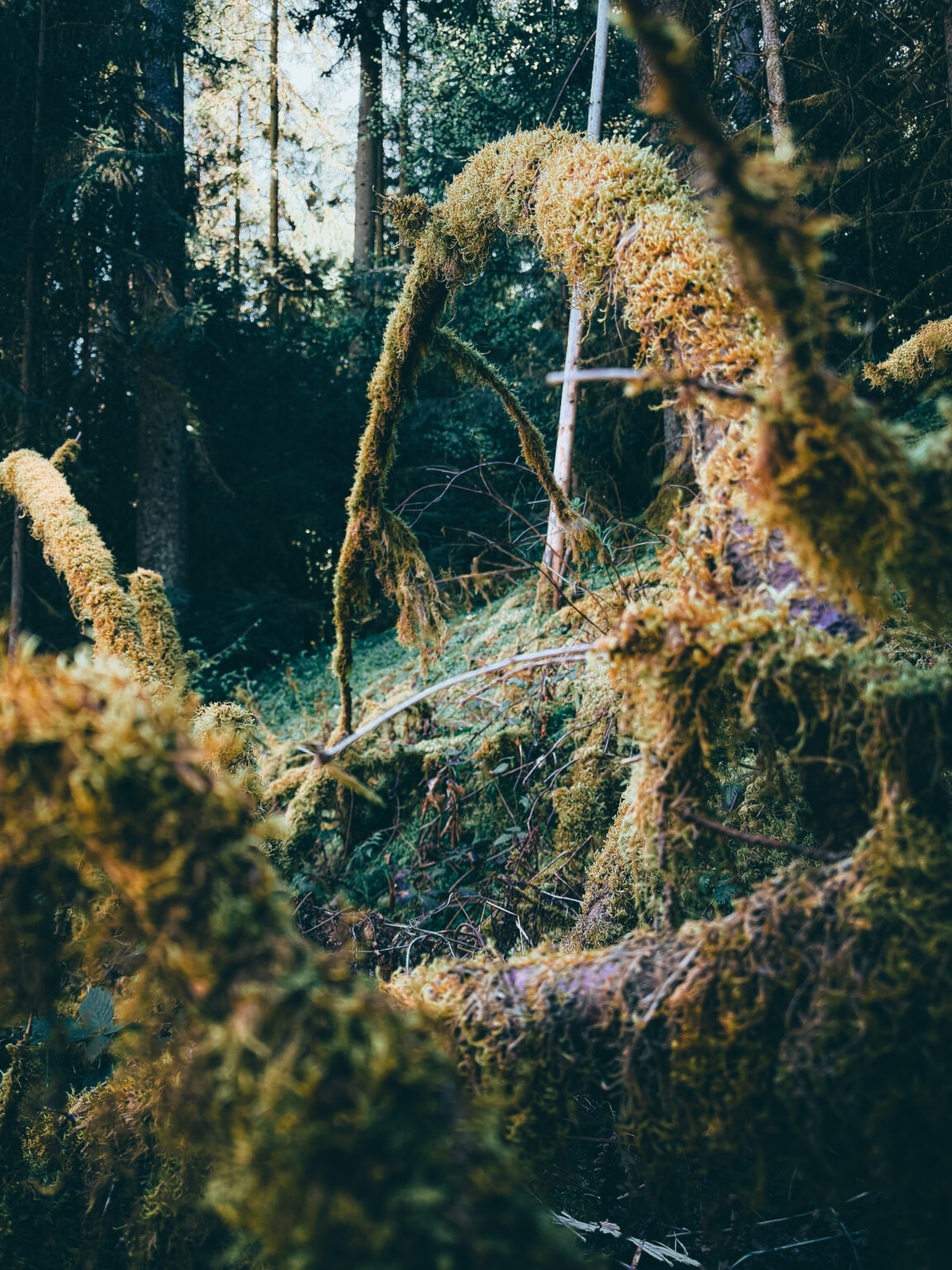
Deep within the Black Forest near Bad Teinach, I came across this fallen tree slowly being reclaimed by moss, moisture and time.
The twisted branches stretched across the forest floor like giant spider legs emerging from the shadows, creating a scene that felt strangely alive and almost otherworldly. Covered in thick layers of moss and surrounded by dark woodland atmosphere, the entire landscape seemed less like a real forest and more like a fragment from an ancient fantasy world.
What fascinated me most was the transformation taking place here. The fallen tree was no longer simply dead wood. Nature had begun reshaping it into something entirely new. Moss, texture and organic forms merged together until the branches almost resembled living creatures hidden within the forest.
The Black Forest has a remarkable ability to create these surreal visual moments. Especially in the quieter areas away from the main trails, the landscape begins to feel mysterious and cinematic. Light disappears between the trees, shapes become unfamiliar and ordinary natural elements suddenly take on entirely different forms.
Scenes like this remind me why the Schwarzwald carries such a mythical atmosphere. It is a place where imagination and nature constantly overlap, revealing details that feel as if they belong to another world.
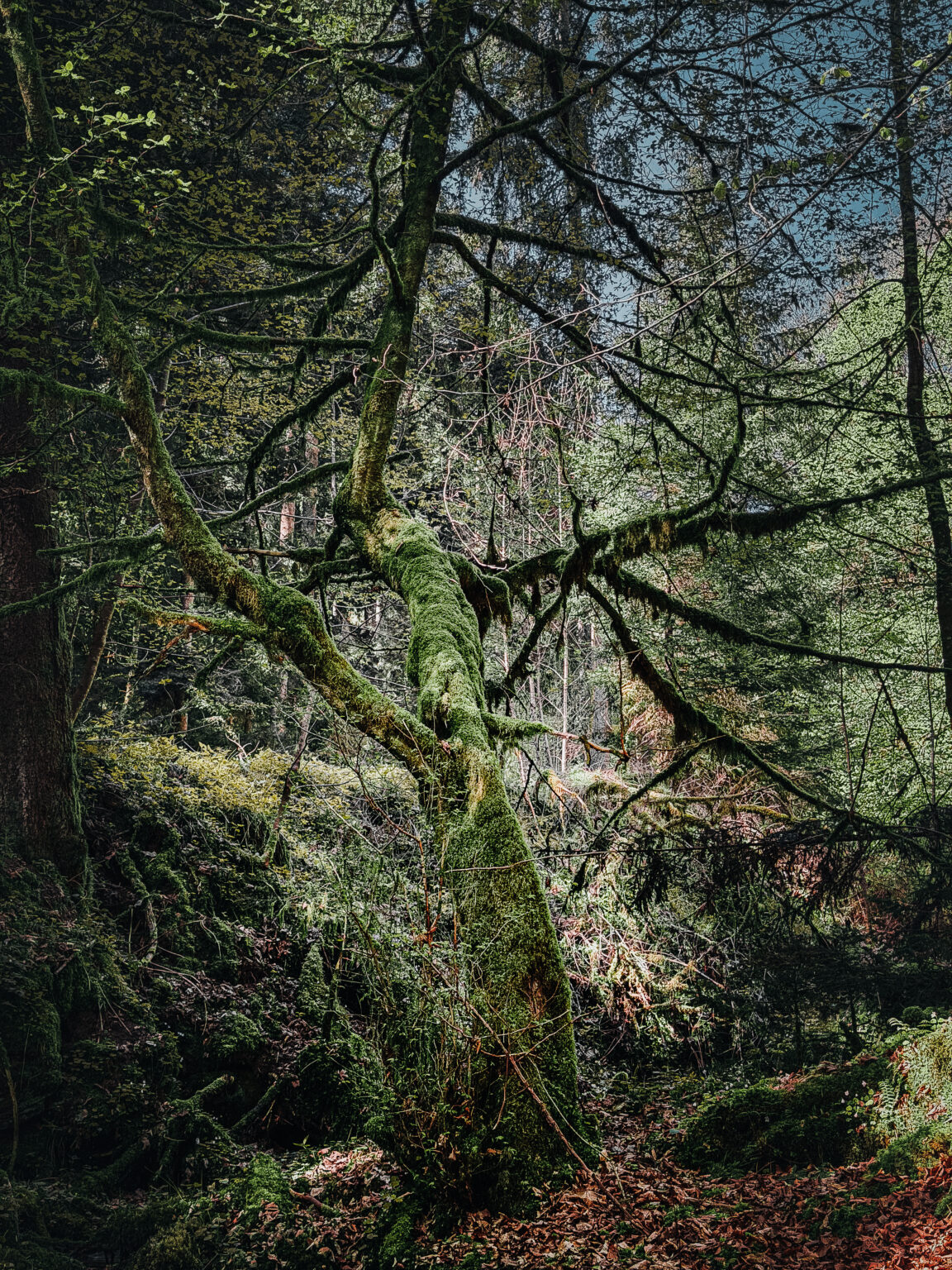
Hidden beside a small stream deep within the Black Forest, this tree immediately caught my attention because of its unusual shape and quiet presence.
Its twisted branches stretched outward in every direction, covered in moss and surrounded by dense forest shadows. Only a small amount of light reached the tree through the canopy above, softly illuminating parts of the trunk while most of it remained concealed within the darker woodland atmosphere. It felt less like a tree standing in the forest and more like a living sculpture slowly shaped by time, moisture and nature itself.
What fascinated me most was how hidden the scene was. From the main trail, this place would have been easy to overlook completely. It was only after moving closer toward the small stream that the tree revealed itself between the shadows and moss-covered stones.
The Black Forest constantly rewards curiosity in this way. Some of its most atmospheric places are not dramatic viewpoints or famous landmarks, but quiet hidden corners where light, texture and nature align for only a brief moment.
Scenes like this are part of what gives the Schwarzwald its almost mythical character. The dense forest, the flowing water and the soft filtered light create an environment that feels timeless and deeply connected to nature.
For me, photographs like this are about discovering those hidden moments that exist silently within the landscape, waiting to be noticed.
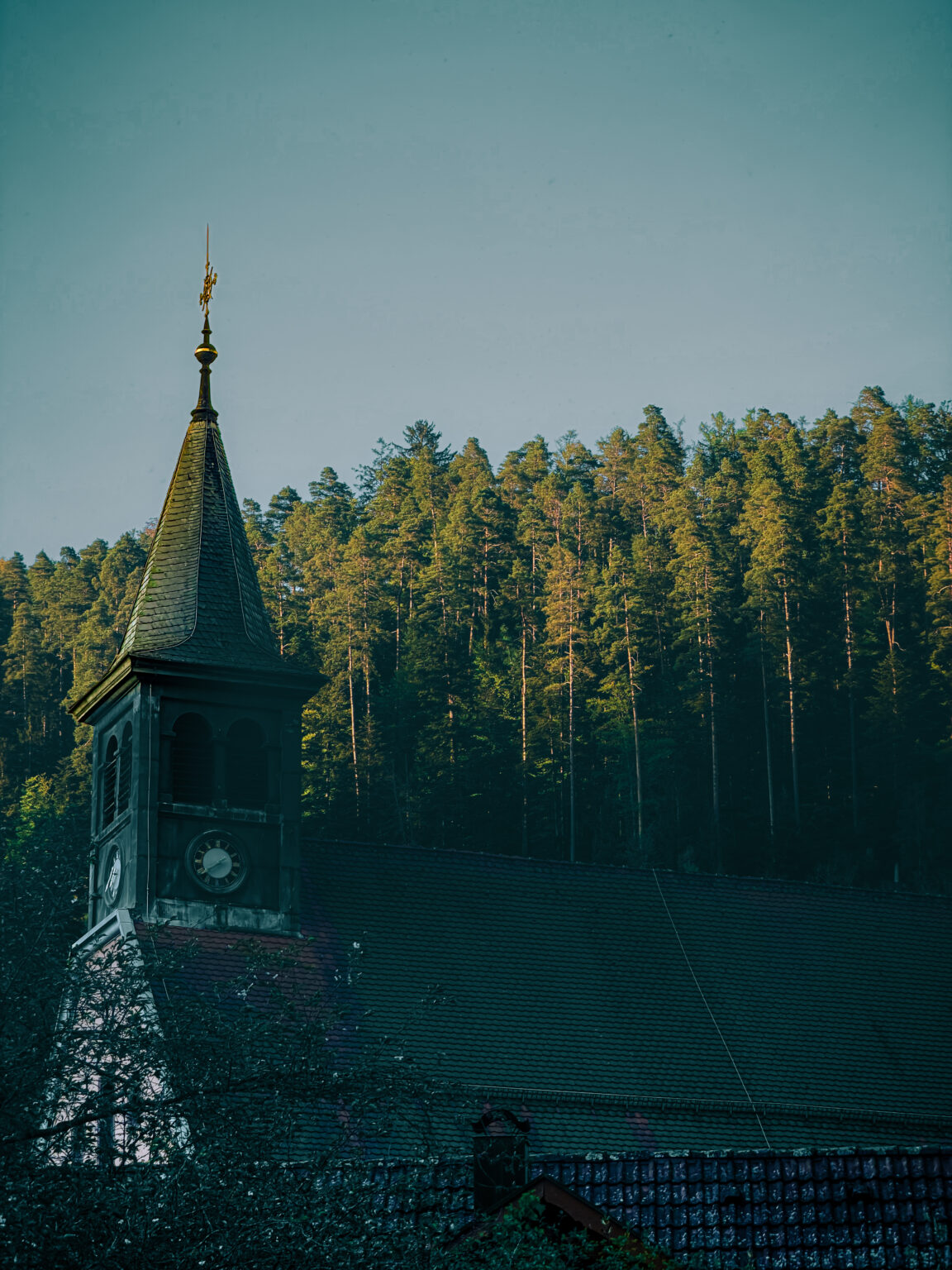
As evening light slowly disappeared behind the hills of the Black Forest, the Dreifaltigkeitskirche in Bad Teinach emerged from the shadows with an almost mystical atmosphere.
Surrounded by dense forest and framed by the dark silhouettes of the Schwarzwald, the church seemed deeply connected to the landscape around it. The soft evening light illuminated the upper treeline while the church itself remained partially hidden in shadow, creating a striking contrast between light, architecture and nature.
What makes the Dreifaltigkeitskirche especially fascinating is not only its secluded location, but also its unique spiritual and historical significance. The church is known for its remarkable “Kabbalistische Lehrtafel” — a rare theological and symbolic artwork created in the 17th century by Princess Antonia of Württemberg. Inspired by Christian mysticism and elements of Kabbalistic symbolism, the teaching panel was designed as a visual representation of spiritual knowledge and the connection between humanity, faith and the divine.
This unusual combination of history, symbolism and forest landscape gives the church a very distinctive atmosphere. Standing there in the quiet evening hours, surrounded by the vast Black Forest, it felt less like a typical church and more like a hidden place suspended between history, spirituality and nature.
For me, this image captures exactly that mood — the feeling of discovering a place that quietly carries centuries of stories within the landscape itself.
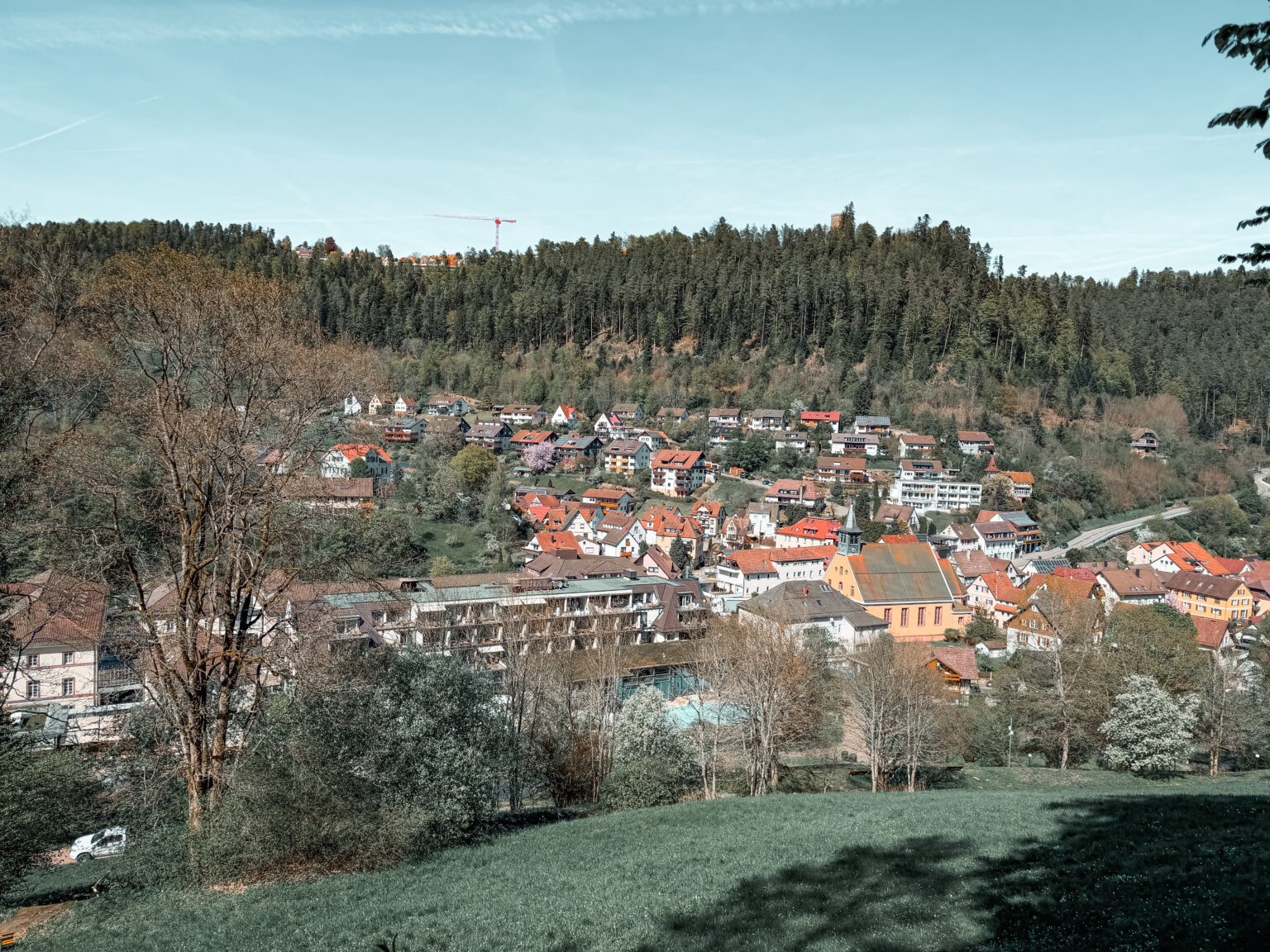
Viewed from above, Bad Teinach-Zavelstein feels almost hidden within the vast landscape of the Black Forest.
Surrounded by dense woodland and rolling hills, the small town appears quietly embedded between nature, history and traditional architecture. In the center of the scene, the Dreifaltigkeitskirche rises above the rooftops, while nearby the Hotel Therme Bad Teinach with its large outdoor thermal pool reflects the region’s long connection to rest, wellness and retreat.
What makes this place so unique is the way the Black Forest completely embraces the town from every direction. The towering trees surrounding the valley create a feeling of protection and calm, giving the entire landscape a peaceful and almost timeless atmosphere.
From this elevated viewpoint, the contrast between human settlement and untouched forest becomes especially visible. Traditional rooftops, church architecture and winding streets blend naturally into the surrounding landscape instead of dominating it. The result is a rare harmony between nature and architecture that defines much of the Schwarzwald region.
For me, this photograph captures the essence of Bad Teinach-Zavelstein — a place where quiet village life, historic character and the immense presence of the Black Forest come together in a uniquely atmospheric way.